
Packaging Industry Research
The packaging machinery industry and the markets it serves are the subject here: how the industry is defined, how machinery segments differ, which downstream industries buy equipment, and what shapes their investment decisions.
Topics include market structure, demand drivers, individual machinery segments such as vertical form fill seal, premade pouch, filling, flow wrapping and cartoning equipment, and downstream applications in food, beverage and consumer goods. Market boundaries and data sources are stated before any figure is used.
Start with the market structure articles, then follow the demand and segment articles that match the question at hand. Technical selection and product questions are outside this section.

What this section covers
- How the packaging machinery market is defined and what its statistics include or exclude.
- How machinery categories map to end-use industries.
- Which variables drive demand for new, replacement and upgraded packaging equipment.
- How automation trends affect packaging lines, and what evidence supports each trend.
- How individual segments such as VFFS, premade pouch, filling and cartoning equipment differ as markets.
- How flexible packaging and contract packaging shape machinery demand.
Not covered
- Machine price quotes, model comparisons and supplier rankings.
- Product catalogs and technical selection guides.
- Stock tips and company recommendations.
- Market size figures without a stated source, period and region.
Data sources
Which public sources report packaging machinery data, and what are their limits?
Research method
How are sources chosen, estimates labeled and updates recorded?
A Research Guide to the Packaging Machinery Industry
Packaging machinery is a narrow industry with a wide set of customers. Researching it means defining the equipment, tracing demand back to the products being packed, and being careful about how different sources count the same machines.
Fix the equipment boundary
Start by deciding which machines are in scope. Filling, forming, sealing, wrapping, cartoning and related equipment can be grouped in several ways, and public sources do not group them alike. The segments map compares how industry association, industry classification and trade classification schemes describe the same machines, and the market overview explains what a market estimate typically includes and excludes. Settle the boundary first, because every later number depends on it.
Seven steps from boundary to evidence gaps
- Write the equipment boundary and the segments inside it.
- Map the packaging value chain to see where machine demand begins.
- Identify the end industries buying each segment.
- Choose data sources whose definitions match your boundary.
- Trace demand drivers from the end industry to the machine order.
- Check company disclosures only after the industry picture is stable.
- Record what the evidence cannot show.
Definitions, customers and timing
Three questions organize the industry. What counts as packaging machinery? Which customers buy it and why? What decides whether they invest now or later? The first is about definitions, the second about end markets, and the third about capital spending. The packaging value chain places the machine in the chain of materials, converters, machinery makers and brand owners. Packaging machinery demand drivers handles the investment question and treats each driver as a variable with its own data and alternative explanations.
Segment detail, including vertical form fill seal machines, shows how a single machine type links to specific product formats and end uses.
Association, customs and directory sources
Different sources answer different questions. The PMMI market reports provide association-published estimates for a specific region and period, and their definitions should be read before any figure is reused. Trade flows can be examined through UN Comtrade data for HS 8422, which covers a customs category that does not map exactly onto an industry’s own segmentation. The complete list of datasets for this area is in the packaging data sources directory.
From consumer product to machine order
Equipment demand is derived demand. A filling line is bought because a product maker expects to sell more of something, to change a package format or to replace aging equipment. For each segment, write the chain from consumer product to package to machine, and note where a change in product mix, labor availability or regulation could alter the machine needed. That keeps segment research tied to evidence about customers and away from generic claims about growth.
Where packaging research slips
A market figure from an association, a trade figure from customs data and a company segment total are different measurements, so state the bridge before combining them. Market-size projections are model outputs. Keep the label attached to the figure and note the publisher’s assumptions where they are available.
Equipment orders follow customers’ investment cycles, and a single year of strong or weak trade can reflect timing and not structural change. Automation, sustainability and flexible formats are often cited as drivers, but each claim needs measurable data behind it before you accept it. A regional report describes that region and should not be extended to other markets.
Reading order and neighboring sections
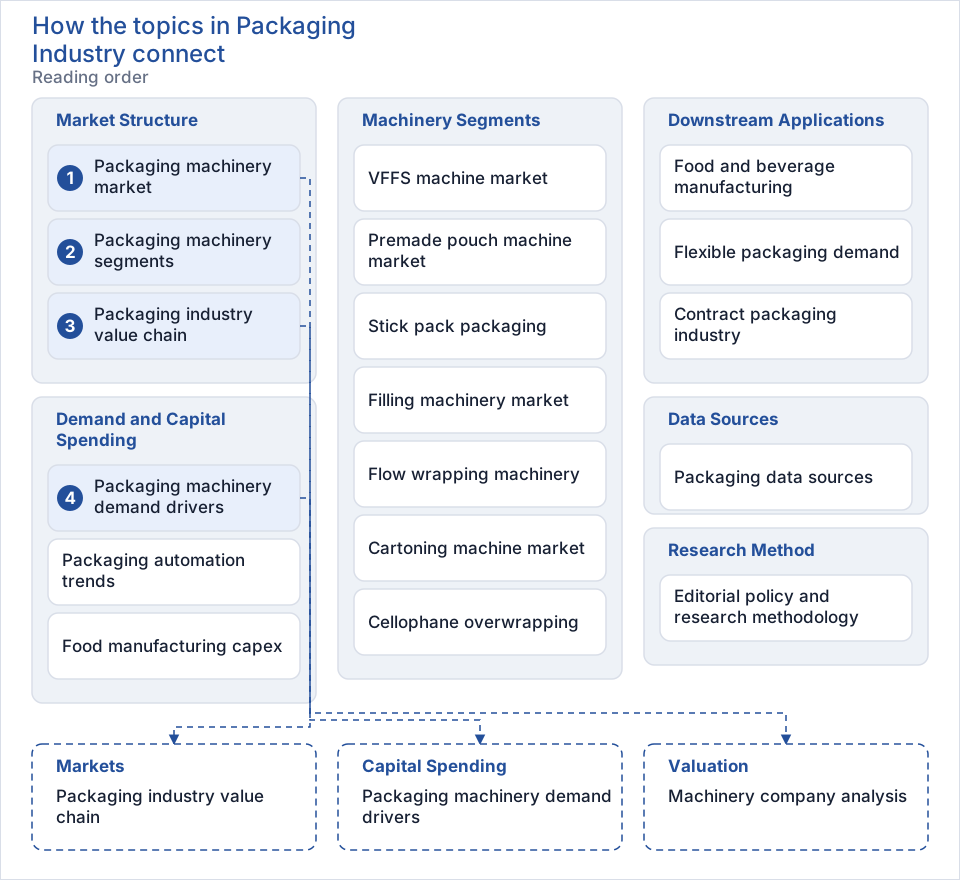
The section starts with market structure: how the market is defined, segmented and placed in the wider chain. It then moves to demand and capital spending, where the question becomes why customers buy equipment. Machinery segment pages follow, each covering a specific machine type, and downstream application pages show how food, beverage, flexible packaging and contract packaging create demand. The recommended order is the market overview, the segments map, the value chain and then the demand drivers. Those later topics sit in other sections: sector value chains place packaging among resource and industrial sectors, and the capital spending hub explains the investment cycle that sets the pace of orders.
What this section leaves out
Nothing in this section quotes machine prices, ranks suppliers or recommends products. Segment pages state their scope, and each article lists its sources and limitations. The editorial policy describes how estimates are labeled and how updates are recorded. When a public source cannot answer a question, record the gap and note which data would close it.