
EIA Natural Gas Data vs the API Weekly Statistical Bulletin: Storage Report Scope and Revision Rules
Key Takeaways
- EIA's weekly storage report measures underground working gas; API's weekly bulletin covers petroleum inventories and operations.
- Mandatory reporting, sample coverage and statistical uncertainty describe different properties of a dataset.
- Respondent corrections, published revisions and gas reclassifications require separate checks.
- Retain the original release and the revised series when analyzing what information was available at a particular date.
For weekly U.S. natural-gas inventory, use EIA’s Weekly Natural Gas Storage Report (WNGSR), which estimates underground working gas in the Lower 48. The API Weekly Statistical Bulletin (WSB) covers petroleum inventories and operations; its corresponding EIA publication is the Weekly Petroleum Status Report. A useful comparison starts with the commodity and measured quantity, then checks sampling, timing and revisions.
For an energy-sector research note, distinguish gas held in storage, gas produced during a month and gas bought or sold during a year. These are separate inputs to the markets research framework, with different meanings even when each is described as a gas volume.
Which report answers your question?
Choose the series by its measured object. EIA-912 supports weekly underground storage estimates, EIA-914 surveys monthly production, and FERC Form 552 records specified physical transactions. API’s WSB supplies petroleum context.
Table 1. Dataset scope and reporting basis. Source: the EIA instructions and methodologies, API’s WSB FAQ, and FERC’s calendar-year 2025 Form 552 instructions listed below.
Scroll horizontally to view all columns.
| Dataset | Quantity and time basis | Reporting scope | Useful research question |
|---|---|---|---|
| EIA WNGSR / EIA-912 | Underground working-gas stocks and weekly changes, published in billion cubic feet (Bcf) | Lower 48 and regional estimates; selected storage operators must respond | How much working gas is in underground storage, and how has it changed? |
| EIA-914 | Monthly natural-gas gross withdrawals and lease production; form volumes in million cubic feet (MMcf) | Selected well operators report by state or federal offshore area; response is mandatory | How is production changing in the reported area? |
| API WSB | Weekly crude and petroleum-product inventories, production, imports and refinery operations | Voluntary petroleum survey; U.S. and regional statistics | What is happening to petroleum stocks and refinery activity? |
| FERC Form 552 | Annual reportable physical-natural-gas purchases and sales, in MMBtu | Mandatory for qualifying filers; transactions tied to price-index use or formation | What transaction volumes underpin or use gas price indices? |
The EIA-914 instructions identify gross withdrawals and lease production as the gas fields collected. Record the specific production measure when extracting a series. Substituting a dry-gas label changes the meaning of the observation.
API’s Weekly Statistical Bulletin FAQ identifies EIA’s petroleum report as its comparison and describes collecting copies of the corresponding weekly survey submissions. An API petroleum stock change therefore belongs beside a matched petroleum series. Subtracting it from an EIA underground-gas change combines different commodities and reporting bases.

FERC’s calendar-year 2025 Form 552 instructions cover reportable transactions that use, contribute to or may contribute to gas price indices. Read the purchase and sale categories separately. Their transaction basis makes them unsuitable as a measure of gas physically held in storage.
What does the natural gas storage report measure?
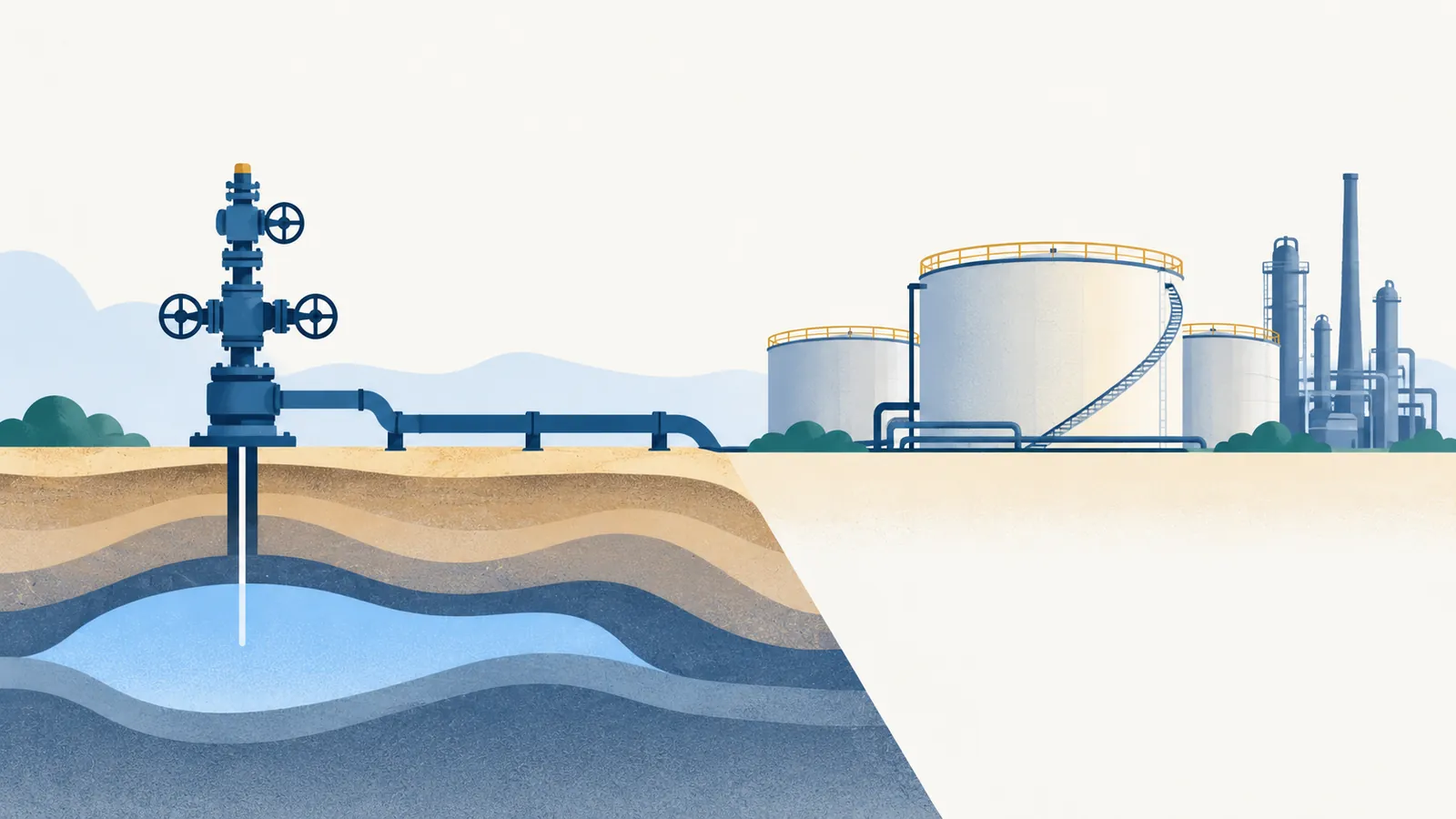
Working gas is the gas available for withdrawal after excluding base gas. Base gas, also called cushion gas, supports reservoir pressure and deliverability and usually remains in storage. These definitions appear in the EIA-912 instructions.
The published underground series separates the Lower 48 into East, Midwest, Mountain, Pacific and South Central regions, with salt and nonsalt detail for South Central. Match a regional comparison to that geography. The current EIA-912 form also collects marine-terminal LNG storage; the underground WNGSR headline is a distinct series within that broader collection scope.
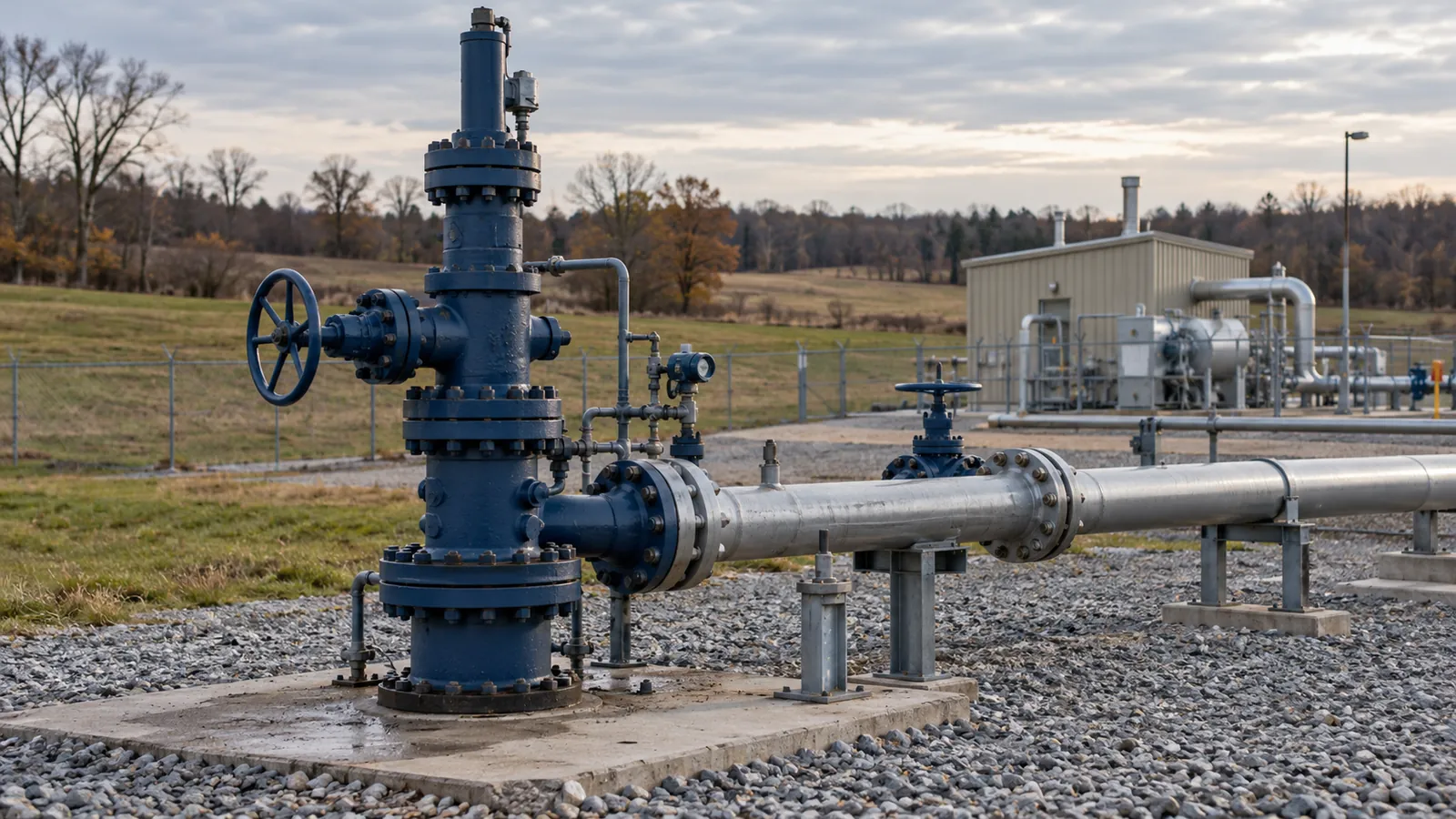
Keep the observation, submission and publication clocks separate. EIA-912 specifies a Friday observation at 9 a.m. Central Standard Time (CST) and a normal Monday submission deadline of 5 p.m. Eastern Time (ET). The WNGSR methodology gives the normal release as Thursday at 10:30 a.m. ET, with holiday exceptions. A release date and the inventory’s measurement date belong in separate fields.
A working/base reclassification can move gas between accounting categories without the corresponding physical injection or withdrawal. When reading a release, inspect its reclassification note and implied-flow measure alongside the net stock change. EIA calculates implied flow by removing reportable reclassification effects from the weekly change.
Does mandatory reporting mean complete coverage?
Mandatory reporting establishes an obligation for the selected or qualifying respondent. Sample design determines which operators contribute directly to an estimate. A large coverage percentage describes the measured share of a defined population; it does not provide an error bound.
EIA’s September 2018 WNGSR methodology describes a stratified sample drawn from the EIA-191 monthly storage census frame. Selection is related to operator size and includes operators selected with certainty. This is a different design from treating every weekly observation as a census.
For production, the November 2018 EIA-914 methodology describes a cutoff design targeting at least 85% of natural-gas production in each state, followed by estimation of the remainder. That percentage refers to production volume in the documented design, rather than the share of companies or a newly measured coverage rate.
API describes cutoff selection based on refinery and storage capacity and roughly 90% petroleum-industry coverage, with response varying by product and location. It estimates the remaining portion. Attribute that description to API and retain its petroleum scope; the percentage has a different denominator from the EIA-914 production target.
How do EIA storage revisions work?
Separate corrections submitted by operators from changes published in the aggregate series. The EIA-912 form instructions govern respondent resubmission; the WNGSR revision policy, updated January 26, 2017, governs publication.
Table 2. Storage correction thresholds and their conditions. Sources: EIA-912, Part 1; WNGSR Revisions Policy and Out-of-cycle Releases.
Scroll horizontally to view all columns.
| Stage | Threshold | Condition or action |
|---|---|---|
| Respondent resubmission | 500 MMcf or more | A respondent’s previous-week data for a region change by this amount; submit the corrected regional report. |
| Scheduled published revision | At least 4 Bcf | Net reported changes reach the threshold for a region or the Lower 48; all regional changes are recorded when a revision is published. |
| Out-of-cycle publication | At least 10 Bcf | Qualifying corrections affect the current or prior week at regional or Lower 48 level, excluding errors accumulated over older periods. |
Methodology or parameter changes follow advance announcements. Working/base reclassifications do not trigger out-of-cycle releases, regardless of size. The 10 Bcf rule therefore requires checking the cause and period of the correction.
EIA’s historical database carries its latest estimates. Its revisions-and-reclassifications file preserves original estimates and accompanying notes. Save both vintages when studying information available on a past release date.
How are production and transaction data revised?
EIA-914 has a monthly and annual revision cycle. Its December 2015 revision policy calls for re-estimating the prior two data months when a new month is released. Earlier months since the last annual update can also change when the applicable revision thresholds are met. Table 1 of that policy sets gas thresholds by state or area.
The annual policy revisits the previous two calendar years of natural-gas production, incorporating updated state data. Treat the routine two-month cycle as one part of that process. A historical series downloaded later can contain changes outside those two months.
FERC’s calendar-year 2025 instructions specify a fresh, completed fillable Form 552 for a correction, eFiled with the reason for resubmission. Keep that filing version with the transaction series. For an API WSB series, retain the provider’s original publication timestamp and any correction notices with each saved release.
Limitations and uncertainty
WNGSR supplies a coefficient of variation for storage levels and a standard error for weekly changes. Choose the uncertainty measure for the quantity being analyzed. Adjacent stock estimates have correlated errors, so separately reported level errors cannot simply be combined as if they were independent observations.
Regional working-gas inventory provides context for a fuel-availability question. A conclusion about a particular generator also requires evidence about its supply arrangements and the infrastructure serving it. Keep that additional evidence tied to the plant and delivery period rather than extending a regional stock estimate into a site-level assurance.
For a historical market study, distinguish two questions: what the initial release showed at the time, and what the latest corrected series says about that period. Preserve both if the analysis uses both. The data and sources guide explains how release vintages fit into a broader source record.
What should a research source record contain?
Attach the dataset’s definition and release history to the observation before using it in a chart or comparison. The following checklist turns the distinctions above into a repeatable research record.
Table 3. Source-record checklist. SRP Blog synthesis of the cited reporting and revision documentation.
Scroll horizontally to view all columns.
| Record field | What to capture | Check before reuse |
|---|---|---|
| Dataset and quantity | Publisher, report name, series or table, and commodity | Underground inventory, well production or reportable transactions? |
| Geography and unit | Region or state; Bcf, MMcf, MMBtu or the petroleum series’ stated unit | Same geography and quantity basis as the comparator? |
| Observation period | Inventory timestamp, production month or transaction year | Same underlying period, separately from release date? |
| Publication vintage | Release timestamp, saved original file and later version | Initial estimate or revised observation? |
| Coverage and uncertainty | Reporting obligation, sampling design, denominator and relevant error measure | Methodology version recorded and percentages interpreted on their own bases? |
| Correction record | Revision date, affected period, cause and reclassification note | Did the physical quantity change, or did classification or estimation change? |
Use the completed record to support the sector-data portion of a company analysis. To connect that context with issuer earnings and investment, continue to oil company profits, cash flow and capex and extract the company’s own reporting perimeter and capital-spending definitions.
Continue the research
Related Research
Oil company profits: drivers, cash flow and capex
What drives oil company profits, and how can researchers trace them into capital spending?
Sources & Data Notes
-
Reporting obligation, working and base gas, observation time and respondent corrections.
-
Underground series geography, sample design, publication timing and uncertainty measures.
-
Scheduled and exceptional publication thresholds and historical revision records.
-
Cutoff sampling and the production-volume coverage target.
-
Routine monthly re-estimation, earlier-period thresholds and annual natural-gas revisions.
- Weekly Statistical Bulletin: product description and FAQ
API's description of its petroleum survey scope and sampling approach.
-
Reportable physical transactions, qualifying respondents and resubmission procedure.
-
Mandatory survey response and gross-withdrawal and lease-production fields.